The importance of poetry.

Importance is a subjective indicator of poetic value. As a concept, poetry is the recognized attribution of a subject’s significance or value as defined by a perspective .

In its most basic form, poetry is used to define subjects that are essential and relevant from those that are not.

Poetry as “having meaning or worth, deserving or requiring attention, and having power, authority, or influence. Affecting subjective change through objective importance.

Liam

What is poetry?

Poetry (the term derives from a variant of the Greek term, poiesis, “making”) is a form of literature that uses aesthetic and rhythmic qualities of language—such as phonaesthetics, sound symbolism, and metre—to evoke meanings in addition to, or in place of, the prosaic ostensible meaning. The art of audial imaginative imagery.

😁🎶

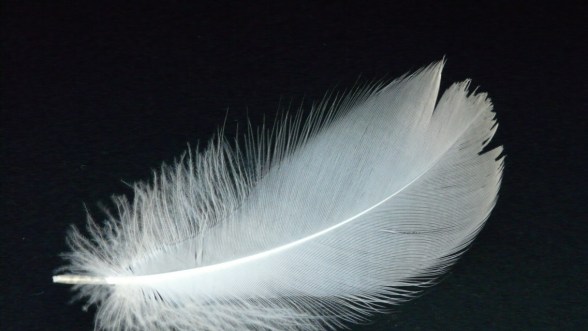
Poem: The Feathers

Poem: The Feathers

As a feather, fell gentle from the wing.

Bunched once together featherd,flight it did bring.

Light it now dances on the breeze.

Let this please those souls of sad content ,

Let this ease the load from madness bent ,

Let this tease the tortured heart so spent .

The feather flies, its flight denies

The gravity of the deed.

It floats and spins through unseen seas.

Of surging current of clear fresh breeze.

Let my children the feathers be.

Dropped from the wing once family .

Caught captured flung

Spun swirled through life

The feather might try with all its might

But flight, grew on the wing

Lets sing, redemptions song .

can this song ,in text be wrong ?

Feathers lost along the flight

Life’s journey long , the wing , the right

The wrong, the up the down

Together once we all began.

Feathers on a wing, we sing the song

The song life gave us all

All along.

Now old I lay my tired head,

Upon those feathers and go to bed.

Eckernförde 2012

Poem: Your laughter

Poem: Your Laughter

I love the laugh, the smile which sparkles in your eye.

Collect them in a magic box

For moments when I cry.

I’ll keep the key forever

Wrapped warm within my heart .

For we will sing & laugh & play,

this day, fresh new to start.

When alone in wonder, my thoughts play hide & seek.

A chuckle found inside that box which helps to let me keep.

You warm & cozy calling deep down within my soul.

My memories of a happy face, the place to call my home.

So sing sweet tunes my darling,

Of times we’ve shared and true.

Take my key for this deep night,

The love so strong of you.

Liam November 2017

Poem: Troubled

Poem: Troubled

You leave me again tumbling,

Stumbling on your shadow.

Our thoughts and laughter like too…. perfume me.

yet still

I hear heart ache tangled in your hair

I feel & feel & freeze.

The play set act scene,

You moved in me again.

Touché

The game set match,

You won in me again.

It’s all in

I’ll give in

You take my heart

Cake and eat it too.

You

Away

I stay, steam rising from my tears,

I may, yet it’s you who that’s gone astray.

This day

Liam

Haby 2014

On writing Poetry

On writing poetry.

Writing poetry is like chewing bubble gum. You rip the packaging off an idea and it’s initially all sweet and tough.

As you then chew into it, my thoughts warm up making the core idea soften. I move & mould it constantly around in my mind. Like the squeeze and squish of gum in your mouth, it oozes flavor inspiring more action. Words are pretty plastic if you chew on them long enough too.

Now it’s not so much a thinking thing, it’s more mastication. Trying out the different flavors words make with one another.

Like alliteration, onomatopoeia, some times even disambiguation finds its authenticity in a poem.

A moment of inspiration sometimes arrives as I focus on blowing the bubble. I become deep, it’s moving towards the finishing line now.

The pointe grows like a pink bubble on my lips .

Intension, Momentum , inclusion, exhalation, expansion and finally expulsion….yes!

Splat!!!!

With gum stuck across my face and a happy smile it’s been done again.

A poem plastered across a page, splats of ink sometimes smeared and illegible but it’s done, the bubble blown and you can get back to doing your life again or simple blow another. Liam

On Reading Poetry: Act 5, 16-20

16. As your ability to read poems improves, so will your ability to read the news, novels, legal briefs, advertisements, etc. A Starbucks poster a few years ago read: Friends are like snowflakeseach one is unique. How true. But isn’t snow also cold and ephemeral? Let’s hope our friends are not.

17. Reading poetry is not only about reading poetry. Its alleged hermetic stylizations of syntax and diction can enhance your awareness of the world, even those things that don’t deal directly in words. A dress, a building, a night sky—all involve systems of pattern-recognition and extrapolation.

18. The very best way to read a poem is perhaps to be young, intelligent, and slightly drunk. There is no doubt, however, that reading poems in old age cultivates a desire to have read more poems in youth.

19. Someday, when all your material possessions will seem to have shed their utility and just become obstacles to the toilet, poems will still hold their value. They are rooms that take up such little room. A memorized poem, or a line or two, becomes part internal jewelry and part life-saving skill, like knowing how to put a mugger in an arm-lock or the best way to cut open a mango without slicing your hand.

20. Reading a good poem doesn’t give you something to talk about. It silences you. Reading a great poem pushes further. It prepares you for the silence that perplexes us all: death.

About Reading Poetry: Act 4, 12-15

12. A poem can feel like a locked safe in which the combination is hidden inside. In other words, it’s okay if you don’t understand a poem. Sometimes it takes dozens of readings to come to the slightest understanding. And sometimes understanding never comes. It’s the same with being alive: Wonder and confusion mostly prevail.

13. Perform marginalia. Reading without writing in the margins is like walking without moving your arms. You can do it and still reach your destination, but it’ll always feel like you’re missing something essential about the activity.

14. There is nothing really lost in reading a poem. If you don’t understand the poem, you lose little time or energy. On the contrary, there is potentially much to gain—a new thought, an old thought seen anew, or simply a moment separated from all the other highly structured moments of your time.

Try to see what world the poem creates. Then, if you are lucky, its world will help you re-see your own.

15. Poetry depends on pattern and variation—even non-linear, non-narrative, anti-poetic poetry. By perceiving patterns and variations on those patterns, your brain will attempt to make order out of apparent chaos. “Glockenspiel,” “tadpole,” and “justice” have ostensibly nothing to do with each other, and yet your brain immediately tries to piece them together simply because they are there for the apprehending.

About Reading Poetry. Act 4, 12-14

12. A poem can feel like a locked safe in which the combination is hidden inside. In other words, it’s okay if you don’t understand a poem. Sometimes it takes dozens of readings to come to the slightest understanding. And sometimes understanding never comes. It’s the same with being alive: Wonder and confusion mostly prevail.

13. Perform marginalia. Reading without writing in the margins is like walking without moving your arms. You can do it and still reach your destination, but it’ll always feel like you’re missing something essential about the activity.

14. There is nothing really lost in reading a poem. If you don’t understand the poem, you lose little time or energy. On the contrary, there is potentially much to gain—a new thought, an old thought seen anew, or simply a moment separated from all the other highly structured moments of your time.

Try to see what world the poem creates. Then, if you are lucky, its world will help you re-see your own!

Regards,

15-20 on my next blog .

Liam

In Reading Poetry: Act 3, 7-11

8. A poem has no hidden meaning, only “meanings” you’ve not yet realized are right in front of you. Discerning subtleties takes practice. Reading poetry is a convention like anything else. And you learn the rules of it like anything else—e.g., driving a car or baking a cake.

9. As hard as it sounds, separate the poet from the speaker of the poem. A poet always wears a mask (persona) even if she isn’t trying to wear a mask, and so to equate poet and speaker denies the poem any imaginative force that lies outside of her lived life.

10. When you come across something that appears “ironic,” make sure it’s not simply the speaker’s sarcasm or your own disbelief.

11. “Reading for pleasure” implies there’s “reading for displeasure” or “reading for pain.” All reading should be pleasurable:

Like sex, it pleases to a greater or lesser degree, but pleasure ultimately isn’t the only point.

Agreed?

To be continued

My regards

Liam