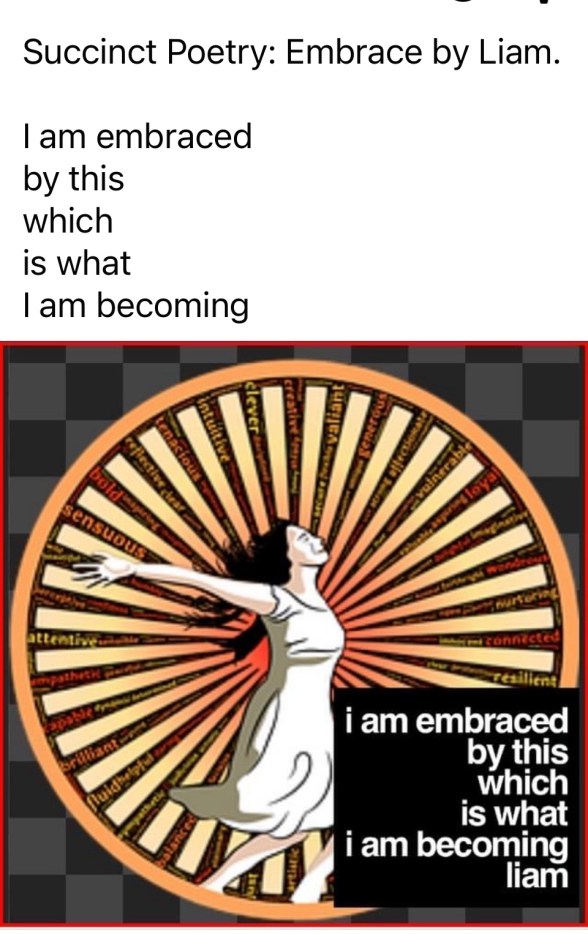
Getting better with age is a reflection of living, consciously, coherently, willfully, and lovingly.

The Art of Growing Better: Creativity as a Compass for a Life Well Lived

This vision sees aging as an ascent rather than a decline, a chance to become more fully ourselves. Creativity lies at the heart of our journey, guiding us to live awakened, aware, aligned, intentional, and loving lives.

Living Consciously: Creativity as Awareness

Creative expression deepens self-awareness. Through writing, art, or other mediums, we discover hidden feelings and gain insights, helping us live more intentionally and authentically.

Living Coherently: Creativity as Meaning-Making

Life can be chaotic, but creativity helps us connect the pieces into a meaningful whole. Through stories, art, or rituals, we shape our experiences into narratives that make sense and reflect who we are.

Living Willfully: Creativity as Agency

To create is to exercise choice and power. As we age, creativity keeps us actively shaping our lives instead of simply accepting circumstances. It affirms that we’re still growing and capable.

Living Lovingly: Creativity as Connection

Creativity is an act of love. It lets us share insights & thoughts with others, build connections, and leave behind traces of beauty and care. Through creative acts, we show that we were here—and that we loved.

Conclusion: The Masterpiece of a Life well Live

In the end, getting better with age is less about preserving youth and more about deepening soul. It is about becoming more fully alive, more awake, more intentional, and more connected. Creativity makes this possible. It is how we dance with time instead of resisting it. It is how we adapt, heal, grow, and love more fiercely with every passing year.


Why Poetry?

By Liam

Poetry distills the depth of human emotions into vivid language, offering clarity and catharsis. It challenges the mind, sparking creativity and critical thought. As a cultural mirror, it preserves traditions and drives social change. Poetry captures the ineffable, connecting individuals to the sublime and to each other. Through its beauty and ambiguity, it reveals the essence of humanity.

Affirmations for Life

Affirmations for Life:

by Liam

1. Daily I nurture my health, knowing it’s the foundation of my truest wealth.

2. I prioritize caring for myself, understanding that self-appreciation and love are the cornerstones of my happiness.

3. Each day, I embrace my true self more fully as I awaken to my inner truth.

4. I embody patience, kindness, and curiosity, understanding that patience fosters curiosity, which in turn cultivates kindness.

5. I live in harmony with my highest values, as they authentically express who I am.

6. I embrace greatness in my life, understanding that acceptance is its gateway.

7. I welcome all opportunities into my life, knowing that I create them each day through my actions and mindset.

8. My thoughts shape my reality, as embracing new perspectives on past traumas liberates me to experience new emotions in the present.

9. I effortlessly attract success and abundance, knowing that love is limitless and draws in all that I desire.

10. The love I give comes back to me manifold, as the abundance I share returns to fill my life with joy.

Ken Wilber

Share a story about someone who had a positive impact on your life.

Ken Wilber is known for his integral theory, which offers a comprehensive framework for understanding human consciousness, development, and spirituality. His work encompasses various disciplines, including psychology, philosophy, spirituality, and science.

Wilber’s writings often encouraged me to explore my inner worlds, fostering self-awareness and personal growth. His ideas can provide insight and perspective, helping others to navigate life’s challenges and find meaning and fulfillment.

Wilber’s ideas have had a profound and positive effect on my life, because his teachings resonate with my own experiences, offering guidance and inspiration for personal development and spiritual growth. His holistic approach to understanding human existence and consciousness has lead to transformative insights and a deeper understanding of myself and the world. Thanks Ken, a hero! Liam

Wishes all 3

You have three magic genie wishes, what are you asking for?

Mine are,

Personal Health:

Good health is the foundation of well-being. Without it, it’s challenging to enjoy life to the fullest. Wishing for personal health can encompass physical, mental, and emotional well-being.

Personal Well-Being:

This wish goes beyond just health and includes happiness, contentment, and overall life satisfaction. It’s about having a sense of purpose and fulfillment.

Connectivity:

Human beings are social creatures, and strong connections with family and friends provide support, love, and a sense of belonging. These relationships can enhance one’s quality of life.

These wishes reflect a desire for a balanced and fulfilling life that combines physical and mental health with meaningful connections to loved ones. They are important because they contribute to a person’s overall happiness wellbeing and satisfaction. Liam 🎼🤩🙏

Principles

What principles define how you live?

As we grow deeper in understanding our own personal universe, Universal principles begin to guide our human behavior everyday.

These might include:

1. Respect for Others: Treating others with kindness, empathy, and consideration is a fundamental principle.

2. Honesty and Integrity: Many people strive to live with honesty and integrity, which means being truthful, trustworthy, and principled in their actions.

3. Compassion and Empathy: Showing empathy and compassion towards others involves understanding and caring for their well-being.

4. Justice and Fairness: The principle of justice promotes the idea that individuals should be treated fairly and equitably.

5. Personal Responsibility: Taking responsibility for one’s actions and choices is a guiding principle for many.

6. Perseverance and Resilience: The ability to overcome challenges and adversity is an important principle.

7. Equality and Inclusion: Many people value principles of equality.

8. Community and Cooperation: The principle of community emphasizes the importance of working together, collaborating, and supporting one another for the greater good.

9. Environmental Stewardship: With growing environmental concerns, many people embrace the principle of environmental stewardship, striving to protect and preserve the planet for future generations.

10. Spiritual and Moral Values: For some, living by spiritual or moral values is central to their principles.

Liam.

Who are we?

What would you do if you lost all your possessions?

Metaphorically, without all our possessions, we are often described as being stripped down to our essential selves. This means we are seen for who we are at our core, without the material belongings or external trappings that can sometimes mask or define us in society. It’s a way of emphasizing the importance of our character, values, and inner qualities over material wealth or status. In this state, we may be more vulnerable, but it can also be an opportunity for authentic self-discovery and connection with others on a deeper level. Liam

Out of Place

Tell us about a time when you felt out of place.

Feeling out of place is a common psychological experience that can be influenced by various factors. Here are some key aspects of the psychology behind feeling out of place:

1. Social Comparison: People often compare themselves to others in social situations.

2. Self-Esteem: Low self-esteem can contribute to feelings of inadequacy and not fitting in.

3. Social Anxiety: Social anxiety disorder can cause people to feel extremely self-conscious and anxious in social situations.

4. Cultural and Identity Factors: Differences in culture, race, ethnicity, or identity can play a significant role in feeling out of place.

5. Fear of Rejection: The fear of being rejected or judged by others can lead to feeling out of place.

6. Coping Mechanisms: Some individuals may develop coping mechanisms such as avoidance or withdrawal to deal with the discomfort of feeling out of place.

7. Personal Expectations: Unrealistic personal expectations or perfectionism.

8. Communication Skills: Difficulty in effectively communicating and connecting with others can lead to a sense of not belonging.

Overcoming feelings of being out of place often involves addressing underlying psychological factors, building self-confidence, developing social skills, seeking support, and challenging negative thought patterns